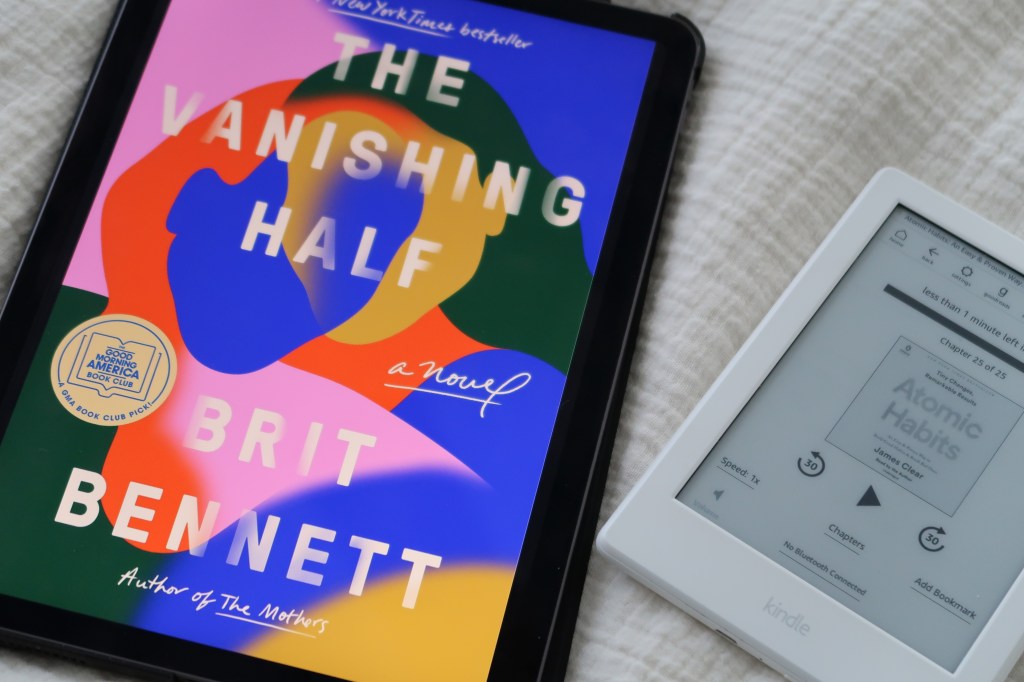
Did you have a reading goal in 2020? I haven’t set a reading goal in a long time, and 2020 wasn’t the year for me reading wise. Historically I turn to reading for relaxation and creative escape, but with the pandemic unfolding so rapidly, I felt overstimulated and too scattered to focus on physical or e-books. Instead, I mostly listened to podcasts (which help created a communal sense while WFH alone) and watched a LOT of ambient cinematic Korean vlogs on YouTube.
By the middle of the year I was seeking some variety, and audiobooks helped me get back into a groove. I ended up knocking out five books overall.
Atomic Habits, James Clear | 4/5
This book sums up 2020 for me. In a “normal” year, I consume productivity content pretty regularly but this past year I did more than ever. I had a voracious appetite for anything that could help me stay on track. Atomic Habits isn’t groundbreaking if you’ve read other texts about habit building, but there are nuggets of useful information.
What I liked: Clear focuses on identity based habit building. He suggests we are able to reinforce an initially shaky identity, as we successfully complete the activity more often (building writing, athletic, creative skills, etc.) He also emphasizes establishing holistic systems that support our desired habits, rather than focusing solely on the temporary achievement and hustle to specific goals or objectives. The systems we put in place focus firstly on our overall personal and environmental care, which indirectly supports us in reaching our goals or objectives. The concepts around identity based change and creating holistic systems of support were the two most impactful concepts for me, I’d say even more than learning about the habit frameworks. I love the idea that by small actions we can reinforce and further “prove” a new identity to ourselves, simply through recurring action. As a strong goal setter, concepts in his book also reminded me to focus on the process more.
“We do not rise to the levels of our goals, we fall to the levels of our systems,” – James Clear
I highly suggest you read this if you’re looking for a fresh perspective on sustainable habit building rather than ‘all or nothing’ approaches!
Me and White Supremacy, Layla F. Saad | 4.5/5
I began reading Me and White Supremacy thanks to a friend who put out an open call on Instagram to begin a book club mid-2020 in response to social calls for racial justice. This was an entry level step to immerse myself in a text that directly challenges and contextualizes the expansive harmful impacts of whiteness. Saad’s book encourages deep personal reflection by weaving in prompts for self and group discovery that Rather than recap her work, here is the link to her website where you can learn more about the anti-racism resources she provides.
What I liked: The book explores how white supremacy manifests in a variety of manners (i.e.: white privilege, white fragility, white silence, etc. ). This text was powerful to review solo prior to weekly or biweekly group meetings. Working through the prompts with others did add a layer of accountability, as well as hearing others’ perspectives and personal experiences. Note: Saad provides specific instructions regarding how to structure group work when using her text.
Save Yourself, Cameron Esposito | 4/5
Esposito is one of my favorite comedians. I’ve been lucky enough to catch two of her sets in person and would continue to watch her stand up if I get another chance (post COVID goals). Her particular strength lies in control of her tone, intonation, and pacing. Because of this, I opted for the audio version of Save Yourself. I enjoy a good memoir. Mainly out of sheer nosiness regarding the minutiae of others’ lives and also wanting to gain a deeper understanding of the experiences that shaped them. I listened to the audiobook while painting my kitchen ceiling a slightly whiter shade of white, and I promise you, Save Yourself, made the experience so much more bearable.
What I liked: Esposito dives into the experience of coming to terms with her sexual orientation while growing up in a Catholic Italian family with lifelong plans to pursue priesthood (she ended up a comedian). Her descriptions of performing heteronormativity in her teens struck a chord with me. Something Esposito does well is dance around and through heavy topics in an approachable way – she uses humor not to diminish the severity of an experience, but contextualize the topic. Her ability to navigate smoothly into your listening space is unparalelled. I experienced this first during her stand up special, Rape Jokes, discussing surviving sexual assault – and found that similar thread present again in her memoir.
The Vanishing Half, Brit Bennett | 5/5
The Vanishing Half started off as a slow burner for me, but about a quarter of the way through I couldn’t put it down! I even stayed up late into the night over the winter break so I could finish it in one sitting. The story explores a pair of light skinned Black twin sisters and their experience growing up in the South. Bennett has a beautiful writing style. The characters seemed tenderly and carefully crafted, and it was fully engrossing.
What I liked: Bennett dives into the complexities of racial identity, sexual orientation, gender identity, colorism, prejudice, the personal ties to home, and so much more. I felt invested in each character and can easily say this was my favorite read of the year.
I set a more structured reading goal for 2021 and am making good progress so far! I’m planning on quarterly updates at least. What’s on your ‘to be read’ list this year?
 isabel whitehead-adams
Leave a comment